November-December 2026 / ALPINE SKIING & RIDING
Stronger for Snow
How Strength Training Can Help
Reduce Injury Risk
By Snow Beast Performance
Build strength before winter so your body is ready for skiing and snowboarding!
Don’t Wait for the Snow to Get in Shape – Every fall, Vermont skiers and snowboarders start looking toward the mountains. Gear comes out of storage, season passes are purchased, and excitement builds for that first chairlift ride. But while skis get tuned and snowboards get waxed, one important piece of equipment often gets overlooked – your body.
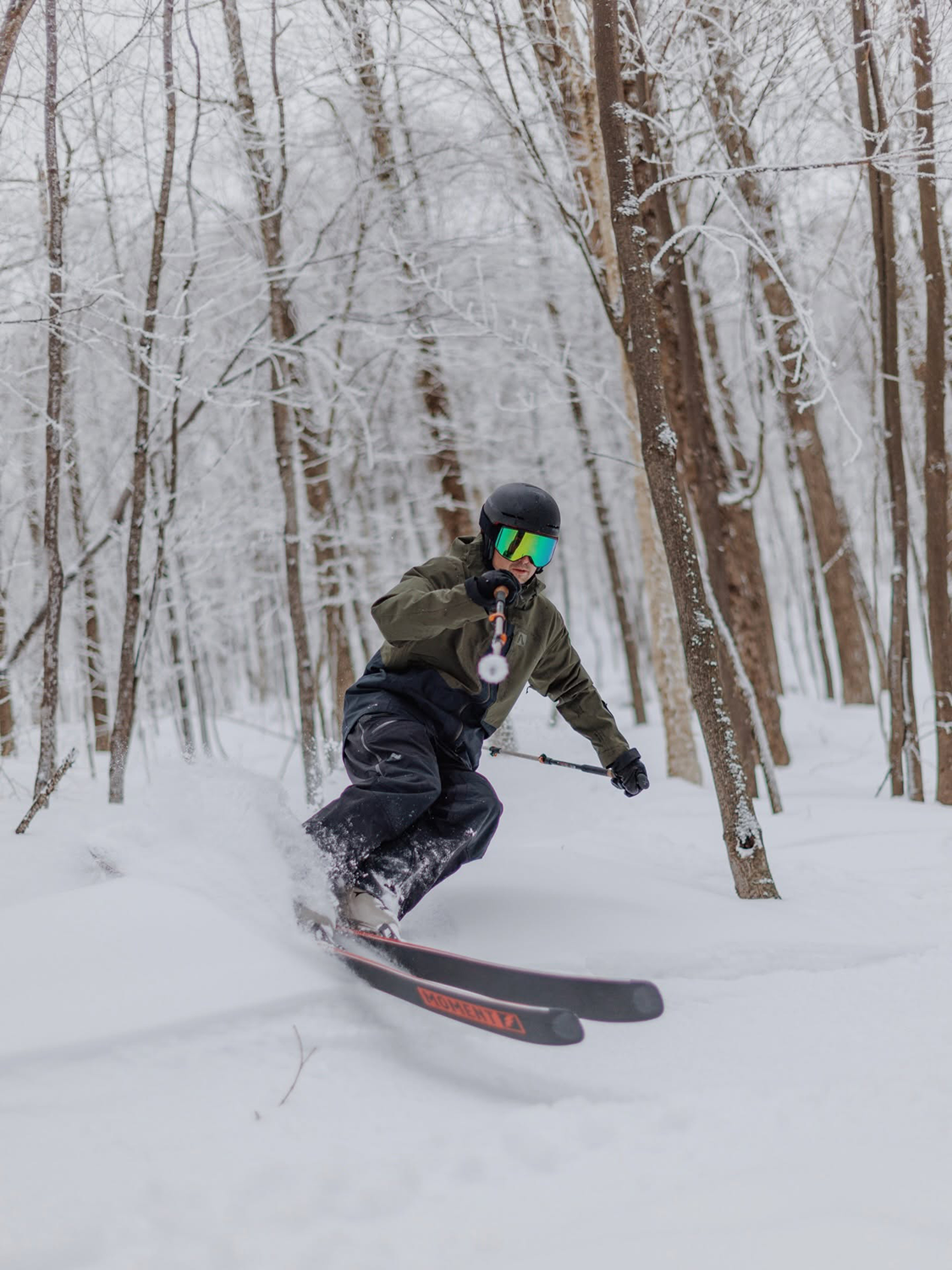
Smooth turns last spring at Magic Mountain.
Whether you’re carving turns, chasing fresh snow, or riding with family at your local mountain, skiing and snowboarding place big demands on your muscles, joints, ligaments, and tendons. The first few days on snow can be a reminder of just how hard your body works. Burning thighs, tired legs, sore knees, or an aching lower back are common complaints. But you don’t have to accept these problems as a normal part of winter.
“Strength training before the season can help you start stronger, last longer,
and better handle the demands of skiing and snowboarding.”
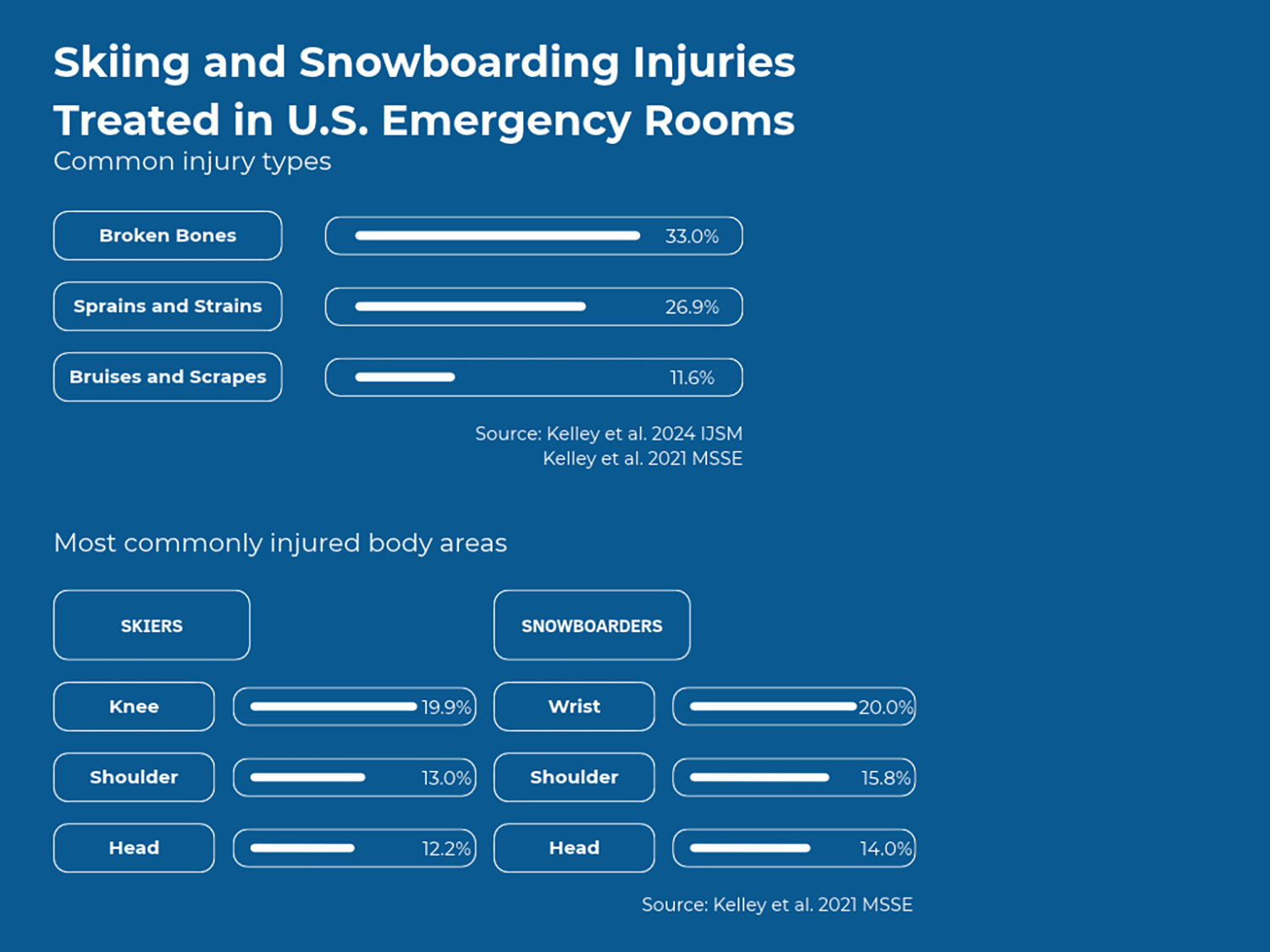
Understanding Injury Risk: It’s Not Always About the Crash – When we think about skiing and snowboarding injuries, we often picture a hard fall. A torn knee ligament, broken arm, busted shoulder, or concussion can happen in a second. Traumatic injuries like these are sudden and severe, and often the result of a fall, crash, or bad landing. But not every injury starts with a crash.
Overuse injuries are different. They build over time. They can sneak up slowly on you. Knee pain, sore muscles, and back pain may develop after repeated activity rather than one hard fall. Old injuries that have been forgotten or ignored can jump to the front of the pain line and are more annoying than a line hopper on a powder day.
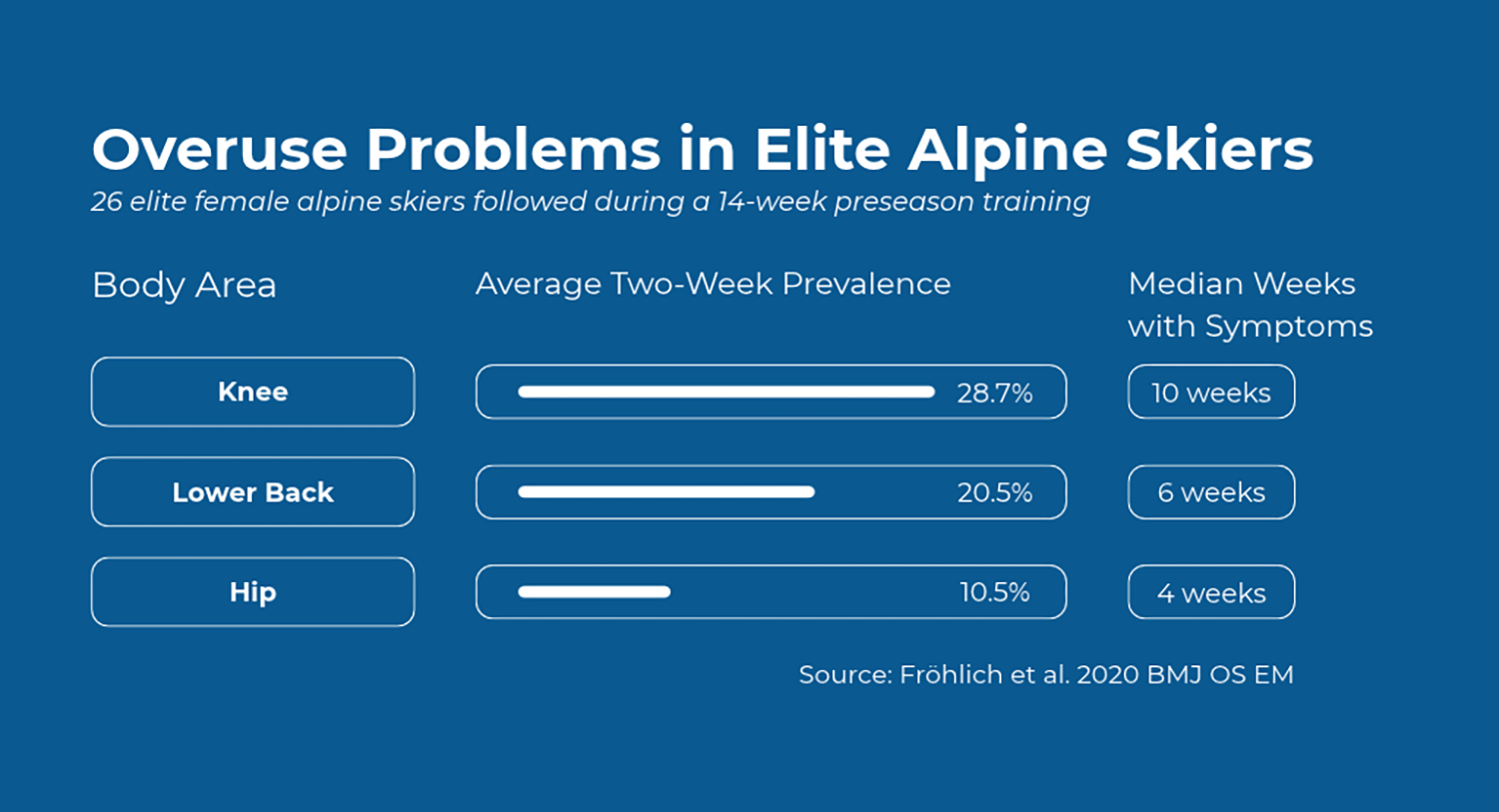
Research on competitive alpine skiers has found that knee pain, lower back pain, and hip problems are among the most common areas affected by overuse. Researchers also found that skiers with previous serious knee injuries were more likely to report ongoing knee problems. Sound familiar? That knee that aches after a few runs, the back that tightens up by lunchtime, or an old injury that never quite healed may be signs that your body needs more attention before winter.
What Happens to Your Muscles During a Day of Skiing? – If your legs have ever felt like jelly after a long day on snow, there’s a reason. In one study, researchers tested the leg strength of 24 recreational skiers before and after four hours of skiing. The next day, their hamstrings were still 8-10% weaker when tested during movements that required them to slow and control their legs. However, their strength during movements that involved pushing or lifting remained largely unchanged.
This shows an important difference in how your muscles work on the mountain. You can have the strength to easily stand up from a seat or a squat, while the muscles that help control your body through turns and absorb bumps may still be tired. Train your legs to be stronger for the mountain by slowing down the lowering portion of squats or lunges to build muscle control needed for a full day of skiing or riding.
Build Strength Where It Matters Most – Skiing and snowboarding are full body activities, and the big muscles in your legs do much of the heavy lifting, or pushing. Getting your legs and core tuned up before the season helps you start strong and stay strong throughout the whole season. The goal isn’t just to make each muscle stronger. It’s to help your muscles work together when you’re skiing or snowboarding.
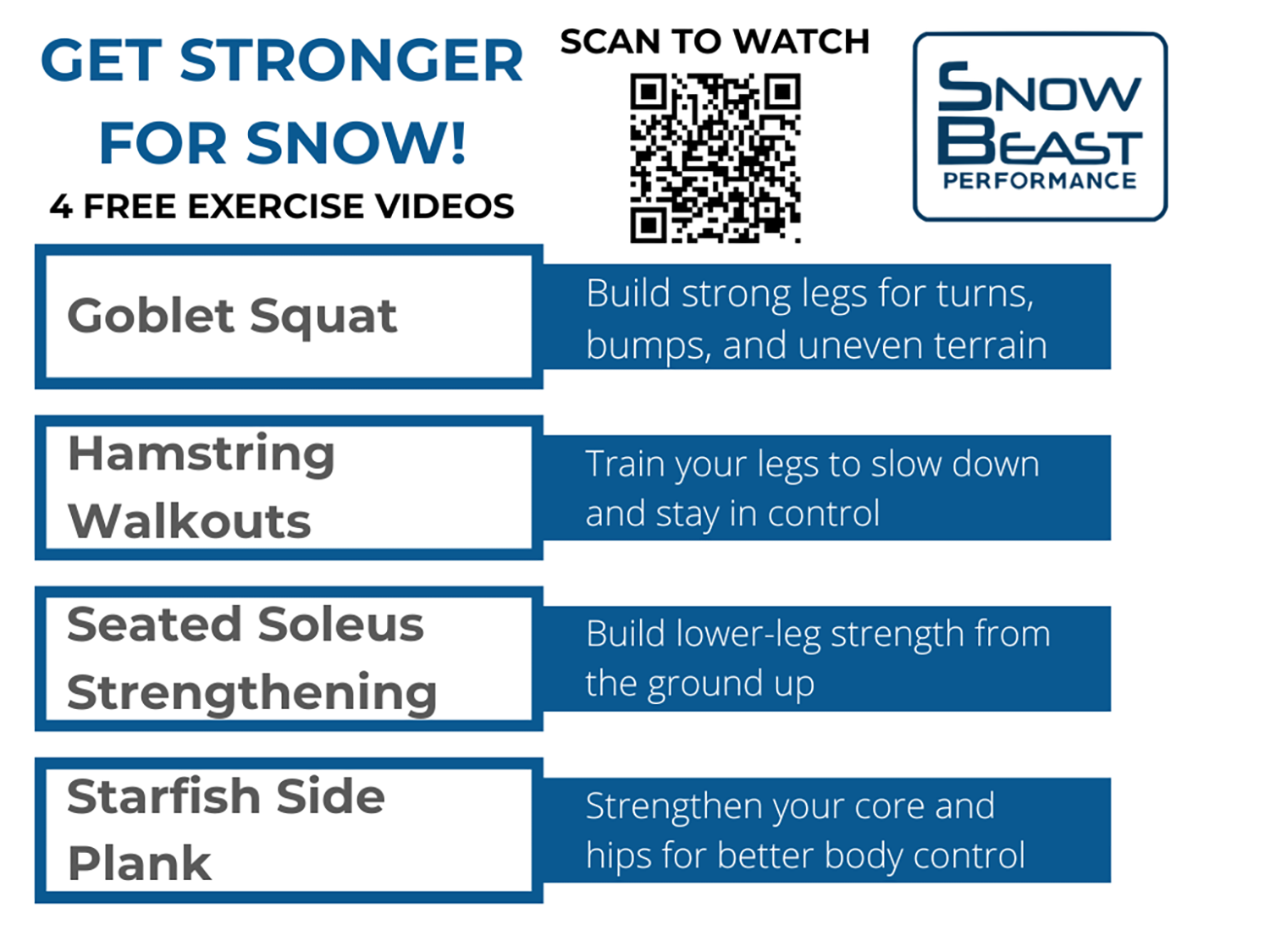
Quadriceps: Your Shock Absorbers – Your quadriceps are the large muscles on the front of your thighs. They help bend and straighten your knees and control your body as you move downhill. When you ski or snowboard through bumps, turns, and uneven snow, these muscles help absorb force. Squats and lunges are great ways to build stronger quadriceps. Lowering slowly during these movements also helps train your muscles to control force.
Hamstrings and Glutes: Power and Control – Your hamstrings are on the back of your thighs, and your glutes are the muscles around your hips and buttocks. Together, they help you push, turn, and stay in control while supporting your knees and hips. Glute bridges and hip hinges are solid exercises for this muscle pair. As you get stronger, adding resistance or speed makes you work harder, leading to more power and control.
Calves: Strength From the Ground Up – Your calf muscles help control your ankles to transfer force through your feet. Even though ski and snowboard boots provide support, your lower legs still work to control pressure and movement inside even the stiffest of shells. Calf raises build strength in these muscles and be sure to try them with straight knees and slightly bent knees to work different parts of your calves.
Core: Keeping Your Body Connected – Your core includes the muscles around your stomach, back, chest, and shoulders. These muscles help you stay steady, control rotation, and connect the movement of your upper and lower body. Side planks are a favorite way to build side-to-side core strength. Add in a leg lift to invite glutes into the exercise.
Make Your Strength Training Harder Over Time – Bodyweight exercises are a great place to start, especially if you haven’t trained much over the summer. Doing the same 15 squats every week won’t keep making you stronger forever though. Your muscles need a challenge to grow stronger. You can do this by adding weight, doing more repetitions, slowing down a movement, speeding up a movement, or using one leg instead of two.
Progressive overload is asking your muscles to do a little more as they get stronger. It’s the same idea as gradually taking on more challenging runs throughout the season. For many recreational skiers and snowboarders, two to three strength workouts each week are a good starting point. As you improve, weights and gym equipment can help you keep building strength.
Hiking or biking on steady climbs and pushing or pulling a weighted sled are all great ways to challenge your legs and core. Be sure to take a rest day for your body to recover between hard workouts. Need more help with a program? A strength coach or physical therapist who works with skiers and snowboarders can help you choose the right exercises and safely increase the challenge.
Don’t Forget Your Engine – Strong muscles are vital, and keeping them working throughout the day is just as important. Downhill skiing and snowboarding involve repeated hard efforts followed by rest on the chairlift. Cross-country skiing and backcountry touring keep a steady effort over long periods. Cardiovascular fitness helps you keep moving and recover between runs.
Luckily, many of Vermont’s favorite activities are great ways to build your heart and lung capacity. Hiking uphill works your heart and legs, while walking downhill challenges your ability to control each step. Mountain biking builds endurance while making your legs and core work. When the weather outside isn’t cooperating, turning to indoor cycling, rowing, swimming, and SkiErg machines are good options.
Trails with space to enjoy at Smugglers’ Notch.
Raising your heart rate and breathing as part of your regular training helps build your body’s endurance, which means your muscles stay stronger, your heart beats healthier, and your lungs breathe easier. All ingredients of a recipe to feel good on the mountain.
Address Problems Before the First Chairlift – One of the biggest mistakes skiers and snowboarders can make is waiting until winter to deal with pain or weakness. Maybe your knee has hurt since hiking season. Maybe your back gets sore after long bike rides. Or maybe your leg never felt quite as strong after last winter’s injury.
Don’t wait until you’re on the mountain to find out if these problems will hold you back. A strength coach or physical therapist can check your strength, movement, and joint motion to find weak or limited areas. They can help guide a plan to improve those less than optimal areas that need improvement, helping make sure you’re ready for first chair.
Start Now to Enjoy More Winter – If you haven’t started getting ready for the season yet, start with simple exercises. Bodyweight movements are effective and accessible to build stronger legs and core muscles. Keep hiking, biking, or doing other aerobic workouts all year long, and especially as you get ready for a new season. Make your exercises harder as you improve and take care of pain before it becomes a bigger problem.
Don’t rely on skiing or snowboarding to get you into shape. Get stronger now so you can enjoy more time on the mountain.
Snow Beast Performance (snowbeastperformance.com) is a physical therapy and performance training clinic in Williston, VT, specializing in helping skiers and snowboarders build strength, improve performance, and recover from injuries. Snow Beast Performance combines individualized rehabilitation, strength training, and objective performance testing to help athletes prepare for the demands of winter and stay active throughout the season.