September-October 2026 / ATHLETE PROFILE
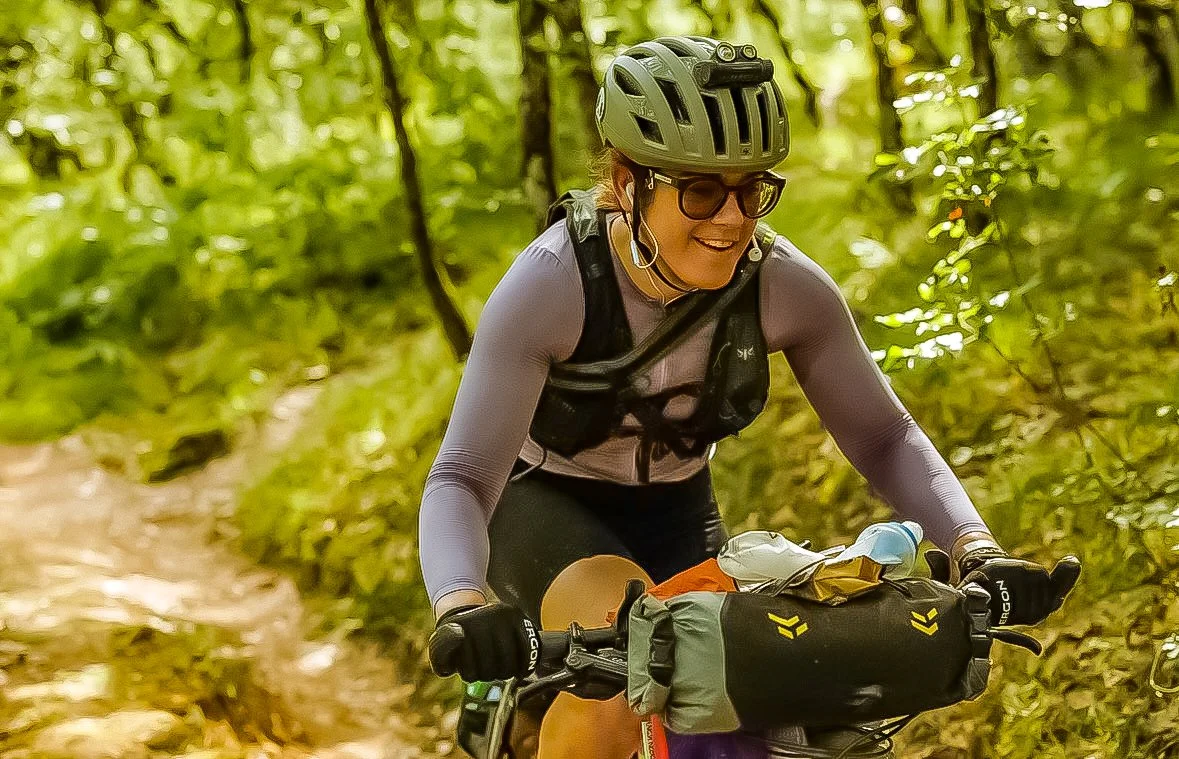
Double-track riding. Steven Shelesky
Stephanie Hall
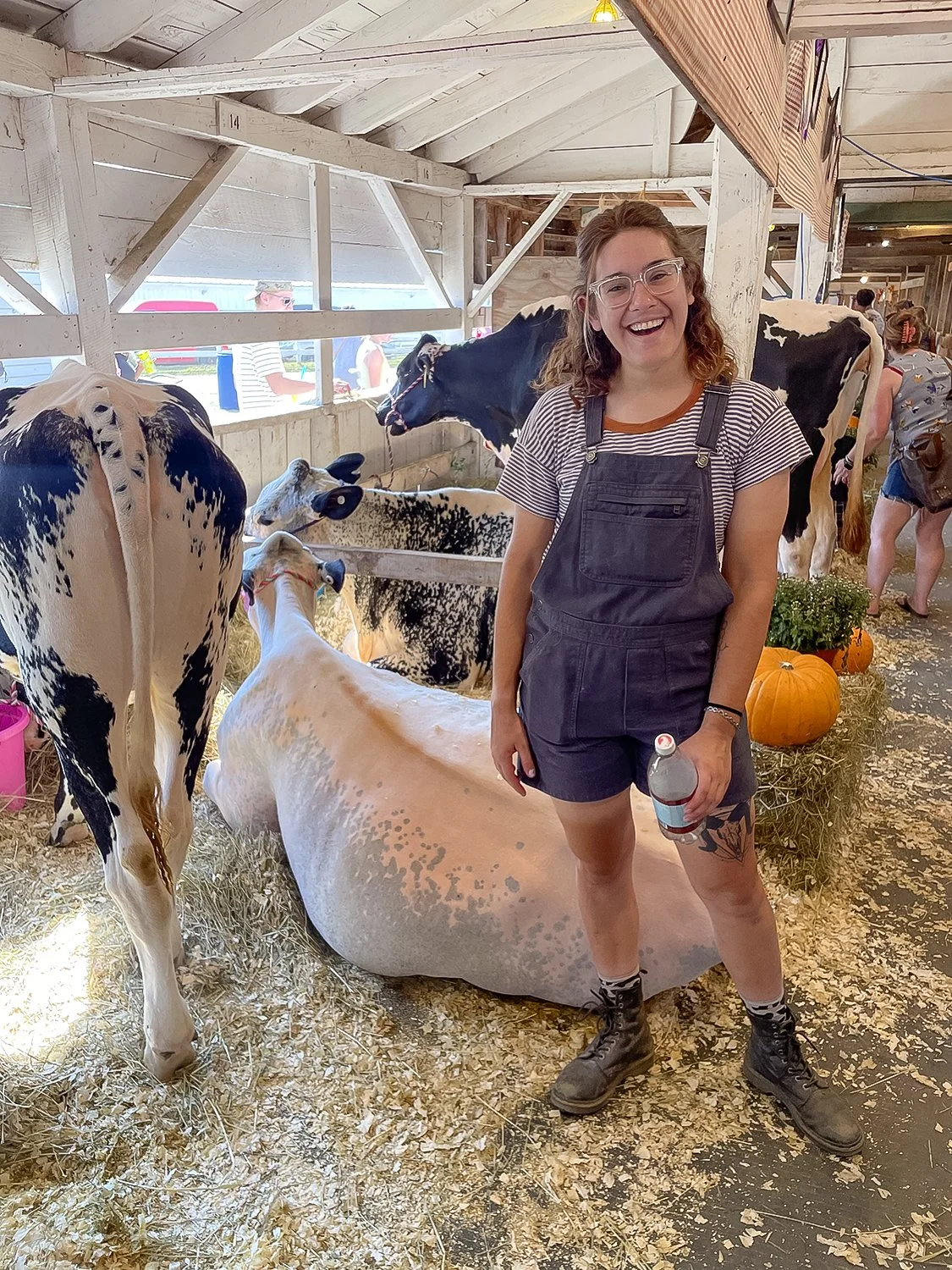
Stephanie enjoying the herd.
Age: 32
Home: Bradford
Job: Biotechnology
Family: Parents, twin sister Kayla, and dog Wyatt
Primary Sport: Cycling
Phyl Newbeck
Stephanie Hall is a big fan of Type 2 fun, something she defines as an activity that is challenging at the time but creates good memories and is great to look back on. In the last few years, she has taken part in a number of Type 2 adventures including a 97-mile winter bikepacking trip with 14,000 feet of climbing and several ultra bikepacking races.
Cycling became part of Stephanie’s life in middle school when she used her Trek mountain bike with front suspension to take the Leesburg, VA rail trail from her home into town. When she was 16, her parents bought road bikes for Stephanie and her sister, and the entire family trained for the MS 150 charity ride to raise money to fight multiple sclerosis. They chose Delaware as the location of the ride because that’s where the siblings were born. As Stephanie got older, she took part in other sports including triathlons, but it wasn’t until she moved to Texas that, as she puts it, “bikes exploded in my life.”
Stephanie lived in Houston and Austin. At the latter location she raced on the Ultraviolet women’s team, competing in road and gravel racing, including the Driveway Series which is a weekly criterium race. She also took part in her first ultra race, the East Texas Showdown, which is a 400-mile offroad event. “I did it with no sleeping,” she said. “It took me 32 hours, and it was really fun.”
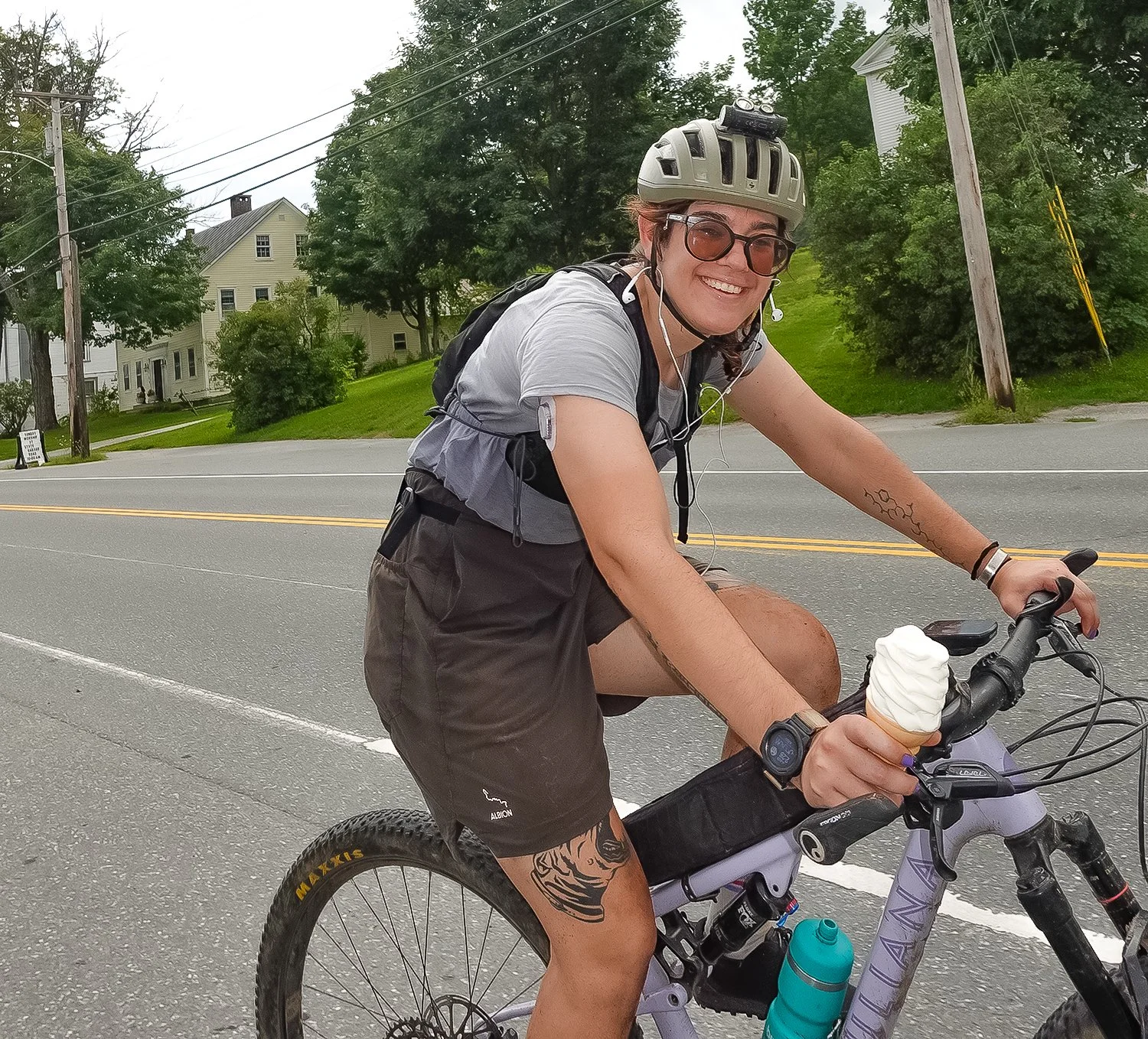
Enjoying her favorite food, a creemee, in Rochester. Kayla Hall
It was in Texas that Stephanie began bikepacking. “I became really fond of seeing how far I could go and the places it would take me and the adventure of it all,” she said. “There is a nice feeling about having everything you need for several days on your person. It’s a different way of traveling, and the racing is fun because there are so many aspects to it including fitness, preparation, and good decision making. That’s been interesting for me.” Moving to Vermont in July 2023 for work, Stephanie sold her road bike but kept her Specialized Crux which has similar geometry. She finds it helpful for the shoulder seasons when she must ride on the road. Her favorite terrain, however, is double track. “I’m becoming more of a mountain biker,” she said, “but it’s not my focus. I love the mix of smooth gravel roads and Class 4 roads (editor’s note: Class 4 roads are the least maintained in Vermont) and there’s plenty of that here.”
Since moving to Vermont, Stephanie has done a number of bikepacking races including the Vermont Super 8 which is 655 miles. In 2024 she had the fastest known time for a woman, completing the course in five days, seven hours, and 14 minutes. Her friend Paige Redman has since bested that mark. “There’s something addictive about realizing all the little things that you could do better,” she said, “and giving yourself a second chance.”
Last year, Stephanie was on the inaugural Old Man Mountain Experimental Bikepacking Team. She is no longer a member but serves as an ambassador. The mission of the team is to support a few bikepacking racers with sponsorships. Thanks to the group, Stephanie was able to travel to Greece in 2025 for the Hellenic Mountain Race. Unfortunately, she got sick and was unable to finish but when she recovered, she took the opportunity to bike along the Greek coastline. “Traveling is fairly expensive and having support beyond gear is hard to find,” she said. “It’s really nice to have some travel costs covered.”
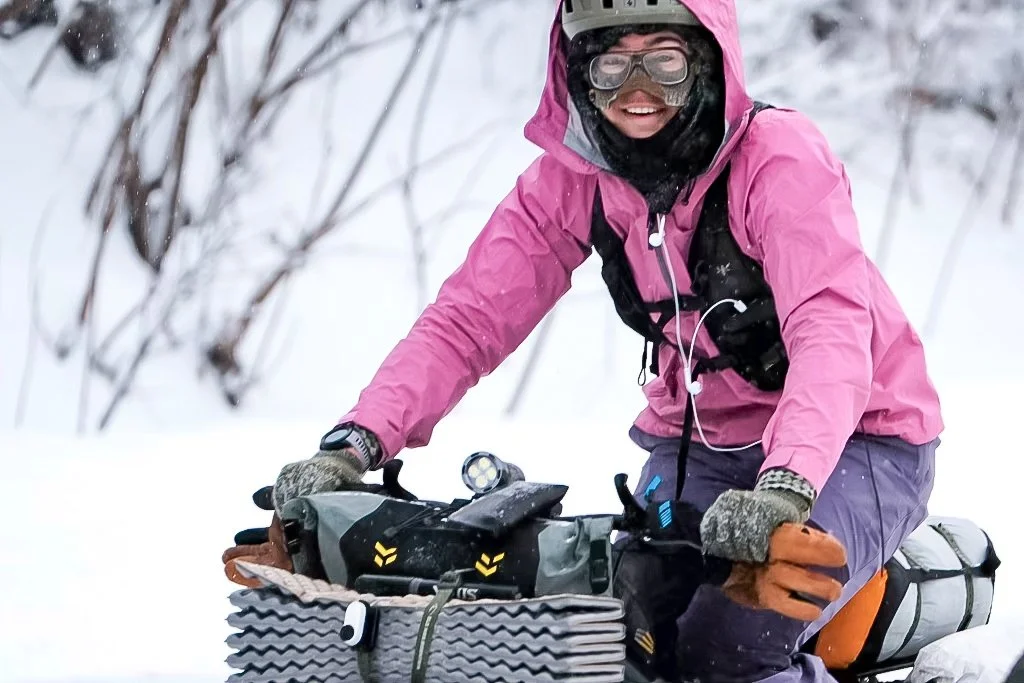
Winter Bikepacking. Derek Ludwig
Stephanie doesn’t restrict her riding to warmer seasons. She recently began winter bikepacking, completing a 97-mile course with 14,000 feet of climbing on her fat bike with 4.6” studded tires. “I had to get a lot of new gear,” she said. “Fat biking is cool because it’s a unique way to see Vermont and even familiar things look different. Roads that are passable in the summer may not be passable in the winter, so it’s been nice to explore the terrain in a unique way.”
Fully loaded, Stephanie’s gravel and light mountain bikes are 40 pounds but her fat bike clocks in at 70 pounds with gear, food, and water. She eschews a tent, carrying a bivy in warmer weather. Her winter trip involved two nights of camping. For the first one she just packed down snow and laid down a tarp but the next day six inches of snow fell so she stayed in an unheated cabin on Wrights Mountain in Bradford. At -4 degrees, the weather was cold enough that her bike computer stopped functioning.
Stephanie does a lot of solo riding. That’s partly because her friend group is spread out geographically but also because she likes to head home after work to let her dog Wyatt out before going for a ride. Additionally, she often wants to ride longer than her friends and she isn’t always able to get a companion for an all-day adventure.
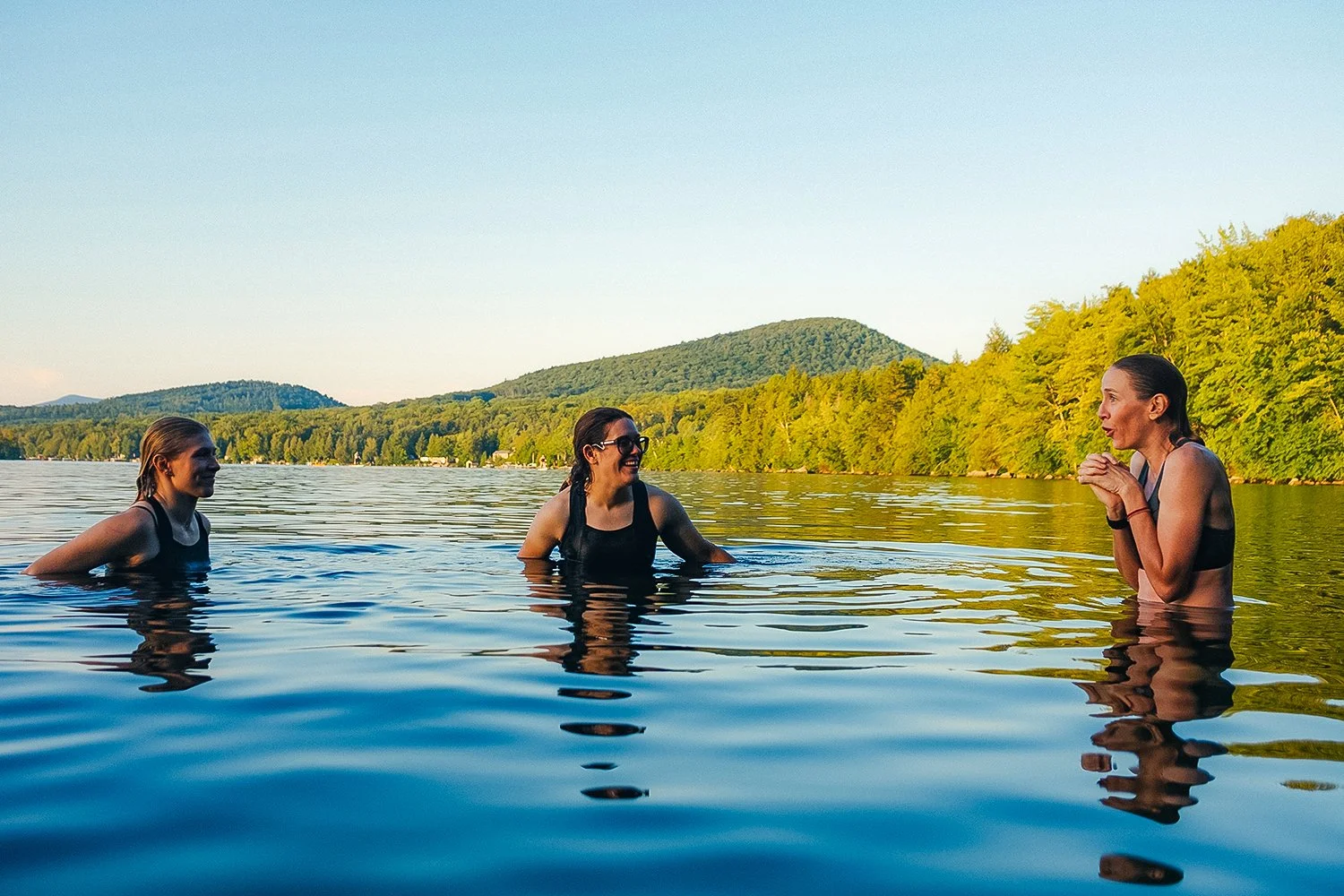
Stephanie and friends at Maidstone in the NEK. Johnny Sullivan
That said, Stephanie has been putting together a group for what she calls Filthy Friday rides. The Upper Valley has a regular women’s ride and a Wednesday night race-like ride, but she thought there was room for an additional option. “I wanted to do some Class 4 and decided to have a more casual ride since I was newer to Vermont at the time,” she said. “I wanted to make friends and challenge myself. The best ways to get better at riding are to follow good wheels and there are strong riders in the area.” In addition to the Friday rides, the group has done longer rides and overnight trips on weekends.
Stephanie has Type 1 diabetes and admits that this creates challenges. While leading an active lifestyle is good for blood glucose control, more extreme sports require more food and may result in higher glucose levels. Multi-day trips are challenging, in part because of sleep deprivation. “It’s harder to manage the highs and lows,” she said, “but I don’t think that holds me back in any way. It’s just something I need to plan for.” Stephanie wears a glucose monitor and an insulin pump which has an automatic mode and loop together. However, she said the systems aren’t powerful enough for high exertion levels, so she must make manual adjustments.
In addition to her bikepacking races, Stephanie has done the Vermont Overland race twice. The Overland is 55 miles of dirt and Class 4 roads with 7,000 feet of climbing. She also did the 24 Hours of Great Glen ride in New Hampshire as part of a four-person team but would like to return to that as a solo rider or with one other cyclist. One of her goals is to race with her twin sister but so far that hasn’t happened. The difficulty is in finding a race that they are both equally excited about.
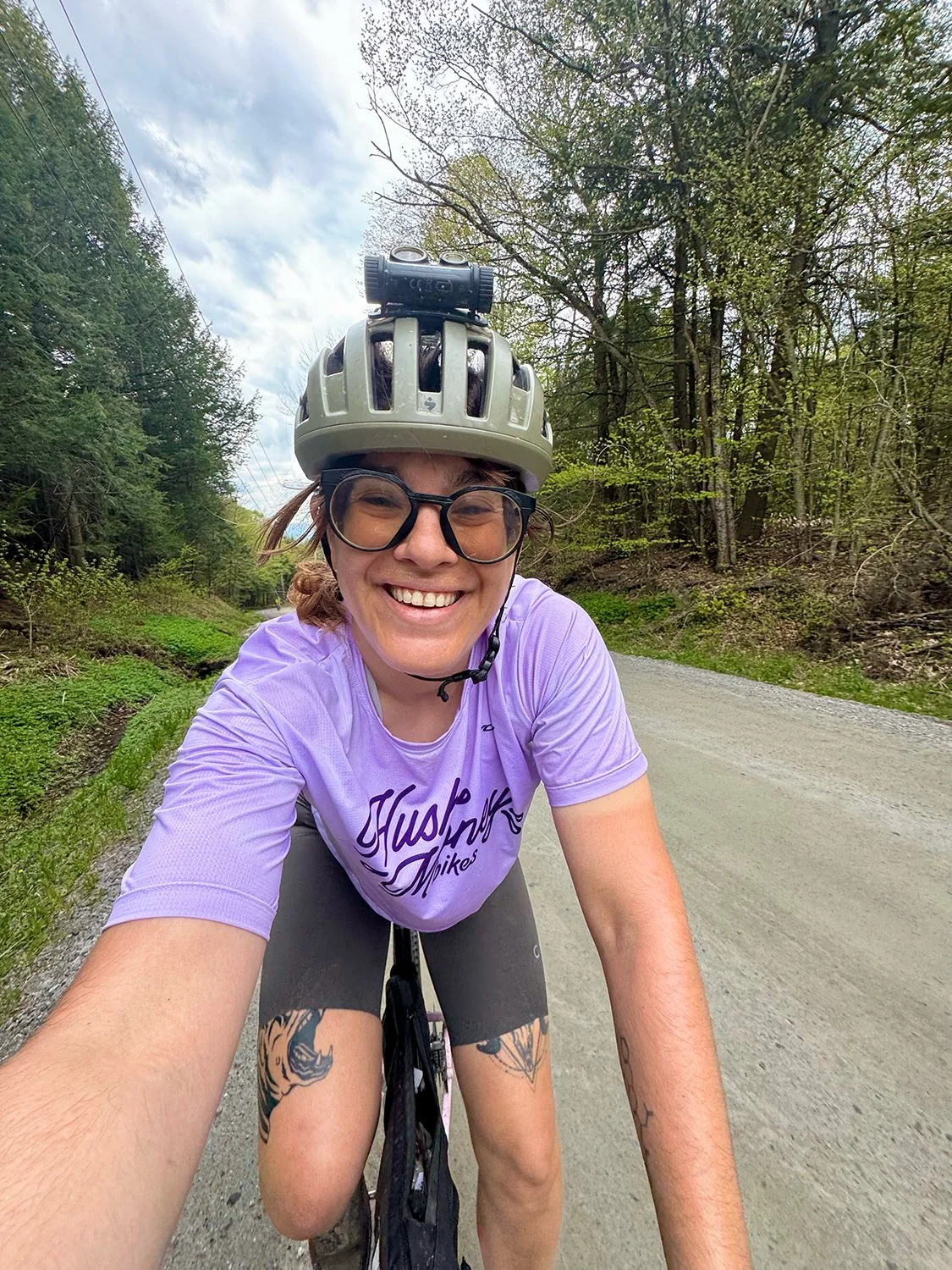
On the gravel.
Among the races Stephanie is interested in doing is the Golden Horseshoe in Ontario which features 1,000 miles of off-road bikepacking. She was intrigued by a race in Turkey which is part of the same series as the ride in Greece but found the price to be prohibitive. She has also considered the bikepacking version of the Iditarod. You need to complete a 100-mile race to register for the 300-mile version and a 300-mile race to register for the 1,000-mile option, although Stephanie said she’d probably stick to the 300. She said that watching cyclists online (with competitors appearing as dots on a map) was like watching paint dry. “Doing 50 miles on a fat bike is an insane day,” she said. “It takes a lot of mental fortitude to be moving that slowly.”
When she’s not cycling, Stephanie enjoys small Vermont farm to table gatherings like burger night at the Flying Dog Farm in Tunbridge or music at Lake Morey in Fairlee.
There are two main reasons why Stephanie keeps embarking on her adventures. “I love connecting deeply with nature and being out in the wilderness for several days on end,” she said. During her winter bikepacking trip she was overcome by the beauty of the moonlight as she lay on the snow. “Emotions run to the surface when you’re under-fueled and tired,” she said “but in a world full of ways to numb, I love it. One of my favorite parts of these adventures is how ‘little’ things become so precious. Life feels better when you notice the little things.”
The other reason is that she likes a challenge. Stephanie said that the Misogi Challenge is a Japanese ritual of doing something once a year that is almost 50% destined to fail. It can be a mental or physical challenge. “I like the idea of ultra racing being my misogi of the year for physical strength, and mental and emotional fortitude,” she said. “You can get to a point which is pretty bare bones when you are tired and hungry. It makes daily life seem easier.”
You can usually find Phyl Newbeck outdoors, cycling, swimming and kayaking, and skiing and skating in winter. She moved to Jericho in 1995 and although still a flatlander, she stacks a mean woodpile. Phyl (vtphyl72@gmail.com) has written for regional newspapers and magazines and is the author of Virginia Hasn’t Always Been for Lovers: Interracial Marriage Bans and the Case of Richard and Mildred Loving.